
Understanding Reinforced Steel: The Basics
If you’re building a concrete slab, wall, or suspended deck, it has to be safe, and it has to last. Reinforced steel makes sure that whenever you’re using concrete, it will hold up.
What is reinforced steel? What benefits does it bring to a build? And where can you use it?
We’ve got the answers!
What Is Reinforced Steel?
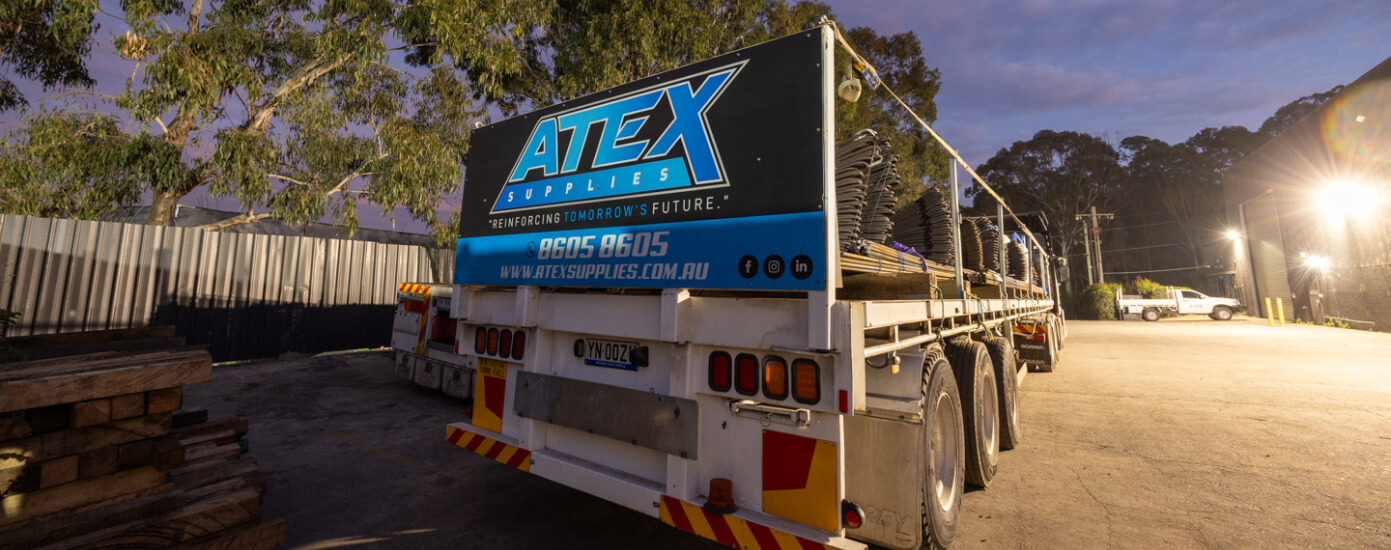
Concrete is great under compression, but it’s not a fan of tension, bending, and movement. Reinforced steel takes on those pulling forces, helps control cracking, and gives concrete the backbone it needs to handle loads, weather, traffic, and daily wear and tear.
Reinforced steel is positioned within the concrete formwork before the pour, so it becomes embedded in the concrete as it sets.

How is Reinforced Steel Made?
Reinforced steel begins as raw steel, made from iron ore or recycled scrap in high-temperature furnaces. After refining, the molten steel is cast into solid blocks, then reheated and hot-rolled through heavy rollers to form long bars, coils, or wire.
During rolling, many reinforcing bars (also called “rebar”) are made as deformed bars. Rollers press ridges (deformations) into the surface as the bar is formed. Those ridges help the steel grip the concrete, so both materials work together rather than the bar slipping inside the pour.
For reinforcing mesh, steel wire is formed to size, then welded into grid sheets. For prefabricated cages, reinforcing bars are cut and bent to shape, then tied or spot-welded into ready-to-install pier, column, beam, or trench mesh cages.
In Australia, reinforcing steel for concrete is typically manufactured in accordance with AS/NZS 4671. Compliance means the steel meets set requirements for things like strength grade, ductility (how it bends without snapping), dimensions, surface geometry (including deformations), and identification/traceability markings.
The Benefits of Reinforced Steel in Construction
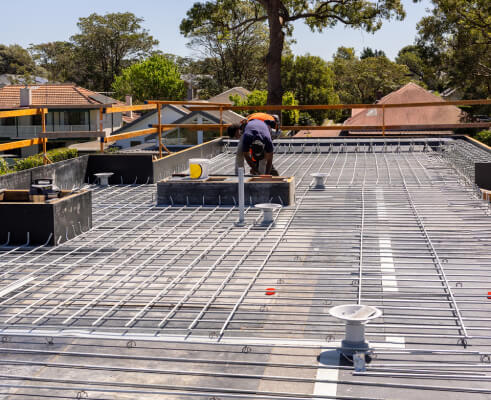
- Increased Strength and Durability: Helps concrete handle heavy loads, bending forces, and everyday movement without giving way.
- Resistance to Cracking and Environmental Stresses: Helps control cracking caused by temperature changes, shrinkage as concrete cures, ground movement or settlement, vibration and traffic loads, wind loads, moisture changes, and coastal salt exposure.
- Cost-Effectiveness: Stronger, more durable concrete means fewer repairs, less patching, and a longer service life, reducing whole-of-life costs.
- Flexibility in Design: Rebar, mesh, and cages can be detailed to suit different shapes, spans, and load requirements across residential, commercial, and civil builds.
Common Applications of Reinforced Steel in Construction Projects
- Residential Projects: Home foundations, slabs and footings, driveways and paths, retaining walls, suspended slabs and balconies.
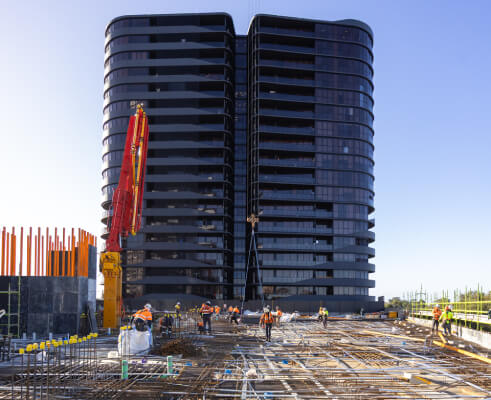
- Commercial Buildings: High-rises, suspended floor slabs, car parks, tilt-up and precast panels, basement and retaining walls.
- Civil Infrastructure: Bridges, roads and pavements, tunnels and shotcrete linings, culverts and drainage structures, marine and coastal structures.
Why Choose Reinforced Steel for Your Next Project?
Builders, engineers, and architects rely on reinforced steel because it helps concrete handle real-world loads and movement, keeps cracking under control, and supports long-term structural performance.
Atex Supplies stocks high-quality reinforcing steel, mesh, and prefabricated cages to suit any job. You can easily match the supply to your design, timelines, and site conditions, without mucking around.
Explore Atex Supplies’ reinforcing steel range and request a quote today to get the right steel sorted for your next pour.
FAQs
What Is Reinforced Steel Used for?
Reinforced steel strengthens concrete, helping it handle loads, bending, and movement without cracking or failing. It’s used in slabs, footings, walls, beams, columns, driveways, retaining walls, bridges, roads, and other structural concrete.
How Does Reinforced Steel Improve Concrete Structures?
Reinforced steel takes on the pulling and bending forces that concrete struggles with. It helps control cracking, boosts load capacity, and keeps concrete structures stronger and more stable over time.
What Is the Difference Between Rebar and Reinforced Steel?
Reinforced steel is the general term for steel used to reinforce concrete. Rebar is one type of reinforced steel, specifically the reinforcing bars placed in slabs, footings, walls, and beams.
Are There Different Types of Reinforced Steel?
Different types of reinforced steel include
- Rebar: Individual straight or bent steel bars placed in concrete to handle structural loads in slabs, footings, walls, beams, and columns.
- Reinforcing Mesh: Welded steel wire grids supplied in sheets or rolls, used through slabs, paths, and pavements to help control cracking and spread loads.
- Prefabricated Cages: Rebar cut, bent, and tied into ready-made shapes, such as pier, beam, column, and trench cages, so they can be dropped into formwork quickly and consistently.
Can Reinforced Steel Be Used in Residential Projects?
Reinforced steel is used in residential slabs and footings, driveways, retaining walls, suspended slabs and balconies, and stairs to handle foot traffic, vehicles, and natural ground movement.
Ready to Reinforce Your Next Project?
Contact Atex Supplies Today!
What is reinforced steel?
It’s the “muscle” inside concrete, helping it take on the daily grind and stay rock-solid.
Where can you get high-quality reinforced steel backed by expert industry knowledge for residential, commercial, and civil projects? Atex Supplies!
Explore our range of reinforced steel and reinforcement accessories today. If you need a quote or advice, don’t hesitate to get in touch! Call 02 8605 8605 or fill out this form .